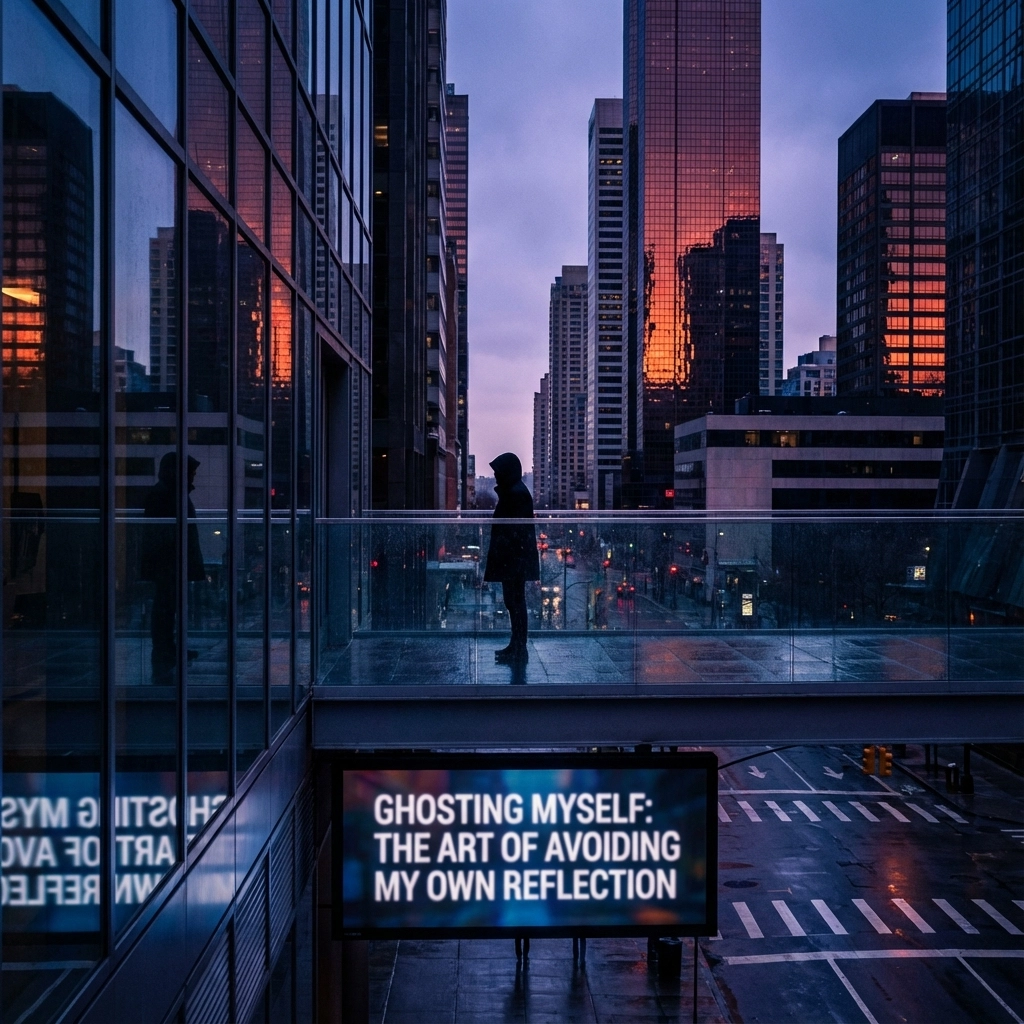
I've been in an active relationship with mirror avoidance for approximately three weeks now, and honestly? It's going better than my last actual relationship. Which tells you everything you need to know about both my dating life AND my current mental state.
Let me paint you a picture: I brush my teeth looking down at the sink. I do my skincare routine by feel alone, like some sort of deranged spa ritual performed by a person who's forgotten what faces look like. I've become a bathroom ninja, sliding past reflective surfaces with the stealth of someone avoiding an ex at Target. The mirror above my dresser? Might as well be a black hole for all the attention I'm giving it.
This isn't vanity. This isn't even about my appearance, really. This is about the psychological warfare that happens when you're forced to make eye contact with yourself when your life feels like a dumpster fire that someone tried to decorate with fairy lights.
Turns out, I'm not alone in this particular brand of self-avoidance. Research shows that nearly 1 in 10 Americans actively avoid looking in mirrors altogether. ONE IN TEN. That's not a quirky personality trait, that's a whole-ass demographic of people who've collectively decided that reflective surfaces are the enemy.

The psychology behind mirror avoidance is fascinatingly twisted. When you look in a mirror, you're not just seeing your physical appearance, you're confronting what psychologists call "ambivalence: pride and shame, recognition and estrangement, life and mortality." Basically, mirrors force you into an uncomfortable truth-telling session with yourself, and sometimes? Sometimes you're not ready for that level of honesty.
When life gets messy, when you're dealing with heartbreak, career chaos, family drama, or just the general existential dread of being a functional adult in 2025, the mirror becomes this judgmental witness to your internal state. You look at yourself and instead of seeing a person, you see every mistake you've made in the last month reflected back at you in real time.
My mirror avoidance started innocently enough. One morning, after a particularly brutal week involving a work presentation that went sideways, a friendship that imploded via text message, and discovering that my plant (RIP, Gerald) had died while I was stress-eating cereal for dinner, I caught my reflection in the bathroom mirror and had what can only be described as an emotional hit-and-run.
The person looking back at me looked tired. Not cute tired, like "I stayed up reading poetry" tired. More like "I've been emotionally demolished by life and am barely holding it together" tired. My eyes had that hollow look of someone who's been running on caffeine and spite for too long. Even my hair seemed defeated.
So I did what any reasonable person would do: I avoided eye contact with myself and went about my day.
Except "one day" turned into a week. Then two weeks. Then suddenly I'm living like a vampire who's afraid of their own reflection instead of sunlight.
Here's the thing about mirrors that nobody tells you: they're basically emotional truth serum in reflective form. When you're thriving, looking in the mirror feels like a celebration. You catch your reflection and think, "Yes, this person has their life together. This person makes good decisions and probably has a savings account."
But when you're struggling? When your life feels like a reality TV show where everyone's fighting and the producers keep adding more alcohol? The mirror becomes this brutal fact-checker that refuses to play along with your delusions of having everything under control.
Research backs this up, people who look in mirrors tend to focus on negative aspects of themselves rather than positive ones, especially when they're going through difficult periods. Your brain, in its infinite wisdom, decides that NOW is the perfect time to catalog every perceived flaw, every sign of stress, every indication that you're not the person you thought you'd be by this age.